
- Home
- Service Records
- How to find which battalion grandad served in
How to find which battalion grandad served in
Regiment is not enough. The war diary is kept by battalion, so this is the fact that unlocks his war.
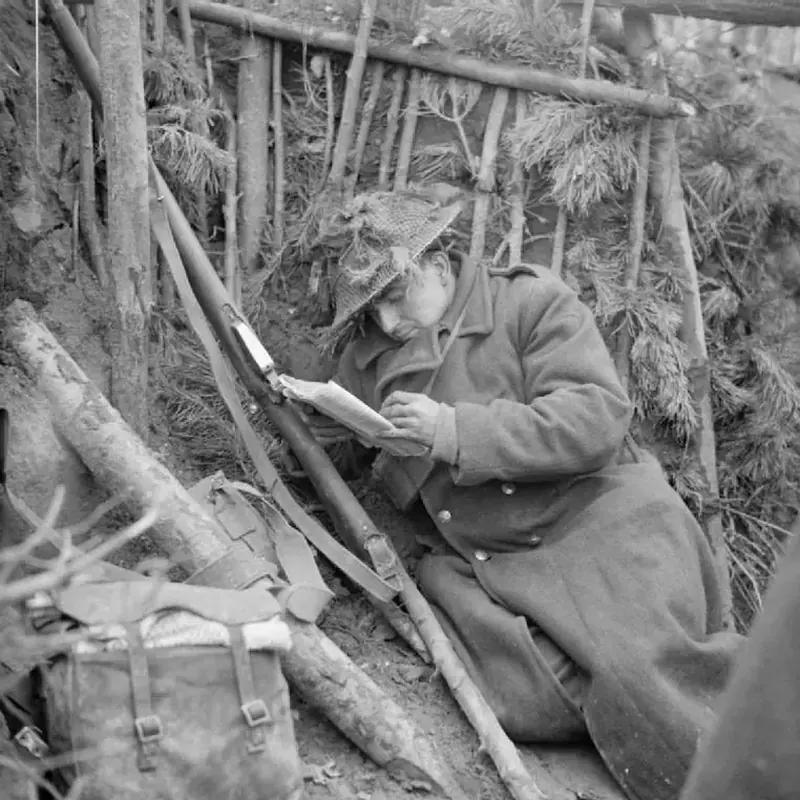

To find which battalion grandad served in, order his WW2 service record. It lists every unit he was taken on and struck off, with dates. If he died in service, his CWGC record usually gives the unit. While you wait, check casualty lists, Absent Voter Lists, photographs and his letters. Each can give the battalion, or narrow it down.
Key facts
- Best source
- His WW2 service record, which lists every unit with dates
- If he died
- The CWGC record usually gives battalion or unit
- If he was wounded
- Daily casualty lists (WO 417) sometimes name the battalion
- Quick clue
- 1939 Absent Voter Lists record service number and regimental details
- Why it matters
- War diaries are kept by unit, often by battalion
Based on The National Archives' Army research guides and CWGC guidance, checked 31 October 2026.
Why bother? Because the regiment is not enough. A regiment had several battalions. They served apart, sometimes on different continents. The war diary, the record of what his unit did each day, is filed by unit.
Why the battalion matters
The National Archives is blunt about it: you need to know which unit, often a battalion, a soldier served with to search the war diaries effectively. Without it, you are guessing across every battalion of the regiment.
Artillery, engineers and corps troops work the same way, with different words. Look for the regiment or battery for a gunner, the field company for a sapper, the squadron for a trooper.
Start with his service record
This is the only source that reliably gives every unit, in order, with dates. It also shows postings you would never guess: training units, depots, hospitals, attachments.
- Born before 1940: order it from The National Archives. Our guide to WW2 Army service records covers fees, proof of death and timing.
- Officer: use the Full record check, not Standard.
- Scots Guards: apply to the regiment’s own archive.
When it arrives, decode the shorthand with our abbreviations glossary. Look for TOS (taken on strength) against a numbered battalion. That line, and its date, is what you want.
Clues you can check while you wait
Did he die in service? Check CWGC
The CWGC find war dead search is free. You can search by name, service number, regiment and country. A record typically shows his regiment and unit, date of death and where he is buried or commemorated, and often the battalion. See our guide to finding a WW2 casualty’s grave.
Was he wounded or captured? Check the casualty lists
The daily British Army casualty lists (WO 417) are on Findmypast (charges apply). The National Archives says they give rank, service number, date and type of casualty, and sometimes the unit or battalion number. Wounded, missing and prisoner entries appear, not just deaths.
Check the Absent Voter Lists
Servicemen away from home could vote by proxy or post. The National Archives notes that these lists record the address, service number and regimental details of each person. For the Second World War era, the 1939 lists are searchable by name on Ancestry and Findmypast (charges apply).
Look at the photographs
A studio portrait in uniform can show his cap badge, shoulder titles and formation signs. The National Army Museum explains that headdress badges identify the regiment or corps. They do not usually show the battalion, but they tell you which regiment’s battalions to check. Our cap badge identification guide shows how.
Read his letters and papers
Letters, pay books, release papers and Christmas cards can carry a unit name or address. Our guide to reading a WW2 letter explains the marks.
What won’t give you the battalion
- His campaign medals. WW2 stars and medals were issued unnamed, so they carry no unit. The ribbons only tell you the theatres. See how to identify British WW2 medals.
- His service number alone. It identifies him, not his unit. He kept it as he moved between battalions.
- Family memory. “He was in the Durham Light Infantry” is a start, not an answer. Treat stories as leads to test.
Officers: two extra sources
Officers are easier to place in some ways.
- The London Gazette published commissions and promotions, and gallantry awards. Search it free. Our gallantry and London Gazette guide has tips.
- The Army Lists. The National Archives says monthly lists ran to 1940, and quarterly and half-yearly lists ran through the war. Monthly lists arrange officers by regiment. Search them by name on Fold3 (charges apply).
When you only know the regiment
Sometimes you only have a regiment and a theatre. You can still narrow it down.
- List the battalions that served in that theatre. Orders of battle give unit locations. The National Archives points to H F Joslen’s Orders of Battle, Second World War (HMSO, 1960).
- Match dates. If you know he was in Italy in 1944, only some battalions fit.
- Read the candidate war diaries. Officers are named. Ordinary soldiers rarely are, but awards, casualties and drafts sometimes are.
- Ask the regimental museum. Many hold nominal rolls, journals and photographs that never reached Kew.
Label what you conclude this way as probable, not proven, until a record confirms it.
Common problems, and fixes
- Several battalions on the record. Normal. Men were posted on as casualties were replaced. Trace each in turn.
- Training or holding units only. He may never have reached a fighting battalion, or the record may be incomplete. Check the dates against his medals.
- Attached, not posted. He served with another unit but still belonged to his own. Read both diaries.
- Different corps. Transfers were common. A man could start in the infantry and end up in another corps.
Next steps
Got the battalion and the dates? Now find and read the war diary. No service number yet? Start with how to find a WW2 service number.
FAQ: Finding his battalion
How do I find out what battalion my grandfather was in?
Order his service record. It lists each unit he joined and left, with dates. If he died in service, his CWGC record usually names the unit. Casualty lists, Absent Voter Lists, photographs and letters can give clues while you wait.
Does a medal tell you his battalion?
Usually not. British WW2 campaign stars and medals were issued unnamed. A gallantry award in the London Gazette normally gives his regiment and sometimes more.
Can I find his battalion from his service number?
Not on its own. A number identifies the man, not the unit, and men moved between battalions. Use the number to find his record or a casualty list entry, which can name the battalion.
Is the regiment the same as the battalion?
No. A regiment had several battalions, and each served separately, often in different theatres. You need the battalion number to find the right war diary.
Do war diaries name ordinary soldiers?
Rarely. The National Archives says most diaries only name officers. They still tell you where his unit was and what it did each day.
Do the casualty lists show his battalion?
Sometimes. The National Archives says the daily British Army casualty lists (WO 417) sometimes give the unit or battalion. They are on Findmypast, and charges apply.
Does a CWGC record show his battalion?
Often, if he died in service. A CWGC record typically shows his regiment and unit, his date of death and where he is buried or commemorated. The search is free.
Sources
Checked 31 October 2026.
- The National Archives: British Army soldiers in service after 1918
- The National Archives: British Army officers in service after 1918
- The National Archives: British Army operations in the Second World War
- The National Archives: Deaths in the First and Second World Wars
- CWGC: Find war dead
- GOV.UK: Medals, campaigns, descriptions and eligibility (archived 2015)
- National Army Museum: Regimental badges