
- Home
- Letters & Documents
- How to find a WW2 grave
How to find a WW2 grave
The Commonwealth War Graves Commission records almost 1.7 million war dead, free. Here is how to find yours.
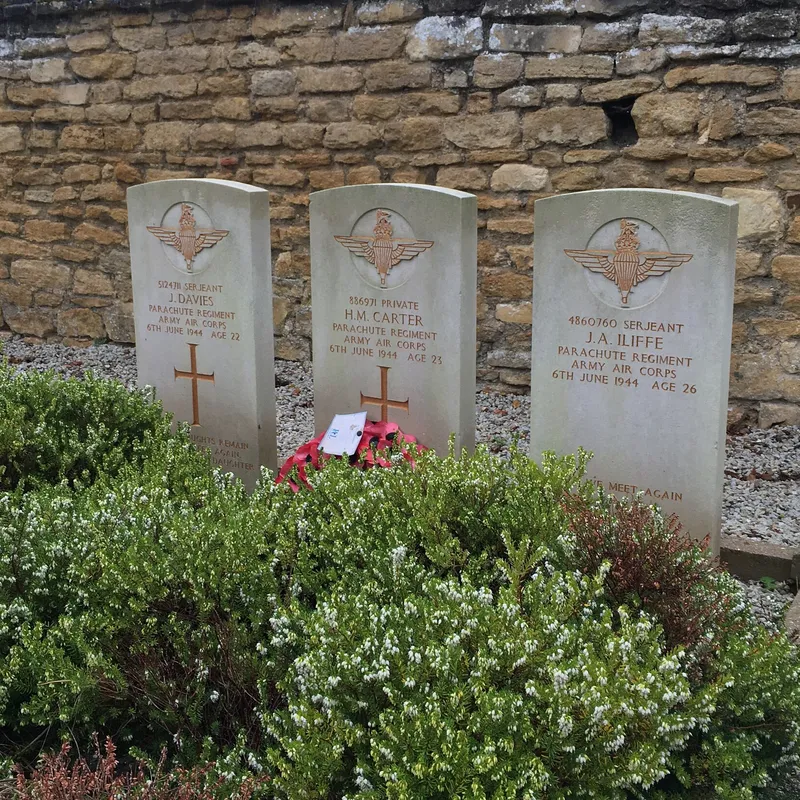

To find a WW2 grave, search the Commonwealth War Graves Commission’s free Find War Dead database. Tick Second World War, enter his surname and initials, and refine by unit or date. The record gives the cemetery, plot and grave, or the memorial where he is named if he has no known grave.
Key facts
- Where to search
- CWGC Find War Dead, free
- Who is included
- Commonwealth service personnel who died 3 Sept 1939 to 31 Dec 1947, plus civilians killed by enemy action
- Scale
- Almost 1.7 million individuals, at 23,000 locations in more than 150 countries and territories
- No known grave
- Named on a Memorial to the Missing
- Civilians
- Listed in the Civilian War Dead Roll of Honour, kept at Westminster Abbey
From the Commonwealth War Graves Commission and The National Archives, checked 31 October 2026.
That is the short answer. Here is how to get it right first time.
What does the CWGC record?
The CWGC says it commemorates almost 1.7 million people, at 23,000 locations in more than 150 countries and territories. Its records cover grave registration, cemetery and memorial registers, and headstone schedules. Digital images of these appear with each casualty’s entry.
A record usually gives:
- name, rank, service number and unit
- date of death
- cemetery or memorial, with plot and grave reference
- sometimes age, and the names and address of next of kin
Sometimes the family added a note. Those notes can be gold.
Who does the CWGC commemorate for WW2?
For the Second World War, the CWGC’s criteria are:
- personnel who died between 3 September 1939 and 31 December 1947 while serving in a Commonwealth military force or a specified auxiliary organisation
- personnel who died in that period after discharge, if their death was caused by their war service
- Commonwealth civilians who died in that period as a result of enemy action, Allied weapons of war, or in an enemy prison camp
So a man who died in 1950 from an unrelated illness won’t be there. A man who died at home in 1946 from war wounds may be.
How to search the CWGC database
Less is more. The CWGC’s own advice is to enter just the surname, initials and war, then refine.
- Go to Find War Dead on cwgc.org.
- Tick Second World War.
- Enter the surname and initials.
- Add his service number if you have it. It is the surest match.
- Refine by regiment, date of death or country.
Results are sorted by relevance. Use Match this search term exactly only when you are sure of the spelling.
Don’t have his number? See how to find a WW2 service number.
Why can’t I find him?
Try these, in order:
- Initials only. Full first names are not always recorded.
- Spelling. The CWGC records the spelling the casualty himself used, so it may not match the family’s.
- Unit. Search by regiment and date instead of name.
- Criteria. Check he meets the rules above.
- Another country’s forces. Some men served with Dominion or Indian forces.
Still nothing? The CWGC asks you to contact it with his full name, branch of service, service number, war, rank, date of death and hometown.
Reading a CWGC record
Take an illustrative record (made up): “Private 1234567, 2nd Bn, Example Regiment, died 20 July 1944, age 24. Son of John and Mary Smith, of Leeds.”
That gives you:
- the service number, for his Army service record
- the battalion, for its war diary
- the date, to match against that diary
- the parents’ names and town, to confirm it’s your man
The next-of-kin address is the one they gave the CWGC, sometimes years after the war. So it may not match where he grew up.
Then read the war diary for that date. Our WW2 war diaries guide explains how.
What if he has no known grave?
Then he is named on a Memorial to the Missing, chosen by where and when he died.
His CWGC record gives the memorial and the panel. You can visit it like a grave.
Occasionally new evidence links a name to a grave marked as unknown. The CWGC says that if the military authorities accept the evidence is clear and convincing, the grave is rededicated with a new headstone. It does not permit exhumation for identification.
Graves in the UK
Not every WW2 grave is in a war cemetery. Men who died at home, or after discharge, may lie in a churchyard or town cemetery. Some have a CWGC headstone. Others have a private family headstone instead. The CWGC still records them if they meet its criteria.
Many sites with war graves are run by councils or churches, not the CWGC. Check access before you go.
Civilian war dead
Blitz victims and other civilians who meet the criteria are on the database. Use the Civilian War Dead 1939–1945 option in the search.
The CWGC says WW2 civilian casualties are commemorated in bound volumes of the Roll of Honour at Westminster Abbey. TNA’s deaths guide puts the list at 66,375 names.
Local war memorials
Your village memorial is a different thing. The CWGC isn’t responsible for war memorials put up by communities, churches and workplaces. Those who built them chose the names. So a man can be on the village memorial and not the CWGC database, or the other way round.
Visiting a WW2 grave
Look up the cemetery on the CWGC site for directions. Personal photographs are welcome. The CWGC asks visitors not to leave personal items on graves, attach anything to headstones or plant flowers. Items left will be removed.
Take a photo of the headstone and the cemetery register entry. Then file it with his letters. Our guide to preserving WW2 letters and documents covers how.
What the CWGC does not hold
The CWGC does not hold:
- service records (for most British Army soldiers, see our WW2 Army service records guide)
- medal records
- birth, marriage or death certificates
For how he died or was wounded, see WW2 casualty records.
FAQ: finding a WW2 grave
How do I find a WW2 grave for free?
Use the Commonwealth War Graves Commission's Find War Dead search. Tick Second World War and enter his surname and initials. It is free and covers Commonwealth service personnel and civilian war dead.
Why can't I find him on the CWGC site?
He may not meet the CWGC's criteria, for example if he died after 31 December 1947 or after discharge from a cause not linked to his service. His name may also be recorded with initials only or a different spelling. Search by surname and initials, then refine.
What does 'no known grave' mean?
His body was never found or never identified. He is named instead on one of the Memorials to the Missing, according to where and when he died.
Are civilians killed in the Blitz on the CWGC database?
Yes. Commonwealth civilians who died between 3 September 1939 and 31 December 1947 as a result of enemy action, Allied weapons of war or in an enemy prison camp are commemorated. Search the Civilian War Dead 1939–1945 option.
Is my local war memorial the same as the CWGC record?
No. Local memorials were put up by communities, churches and workplaces, who chose whom to include. The CWGC is not responsible for them, so names can differ.
Sources
Checked 31 October 2026.