
How to find WW2 gallantry awards in the London Gazette
Family story says he won a medal for bravery. Two searches can prove it, and often tell you why.
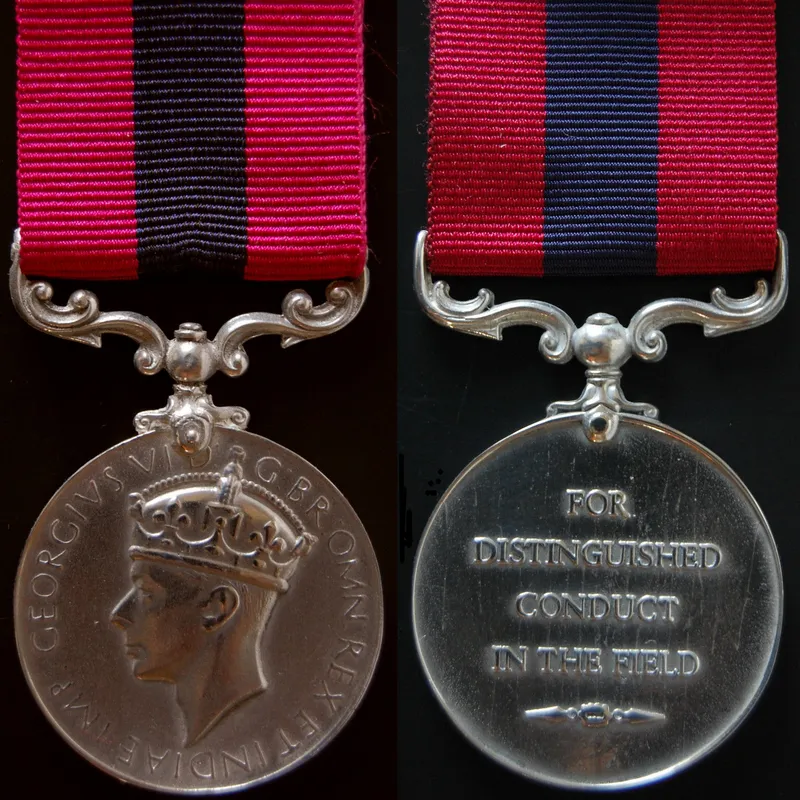

To find WW2 gallantry awards, start with the London Gazette. The National Archives says almost all gallantry awards to British nationals were announced there, and it is free to search by name or service number. Then look for the recommendation in WO 373, which usually says what he did.
Key facts
- Announcement
- London Gazette, free to search at thegazette.co.uk
- The story
- Recommendations in WO 373, 1935 to 1990, online at TNA (£)
- Search by
- Name, service number, date and type of award
- Watch for
- A delay between the deed and the Gazette notice
- Mentions in Despatches
- Bronze oak leaf on the War Medal ribbon; recommendations in WO 373
- Civil Defence
- HO 250 on Ancestry (£) for 1940 to 1949
From The National Archives' gallantry medals guide and GOV.UK medal guidance, checked 31 October 2026.
Two searches. One proves the award. The other tells the story.
Why the London Gazette comes first
The London Gazette is the official government newspaper. TNA calls it the best place to start, and warns that a Gazette notice is often the only record of an award that survives.
You can search The Gazette website by:
- name
- service number
- publication date
- type of award
How to search the Gazette for WW2 gallantry awards
Narrow the dates. TNA warns there was always a delay between the deed, the award and publication. Search from the date of the action to a year or more afterwards.
Use his service number. Names repeat. Numbers don’t. If you don’t have it, see how to find a WW2 service number.
Try variations. Search surname with initials, and surname alone with the award name.
Read the whole notice. It may give his rank, number and unit. The unit is a gift. It tells you which war diary to read.
Does the Gazette give the citation?
Sometimes. TNA’s guide says the Gazette includes citations for:
- Victoria Cross awards of the First and Second World Wars
- Distinguished Service Order awards of the First and Second World Wars
- Distinguished Flying Cross: many Second World War awards
For most other awards, expect only the announcement. TNA notes that citations, when published, did not always appear on the same date as the announcement.
What is in WO 373?
WO 373 holds recommendations for military honours and awards, 1935 to 1990. TNA has the images online for a fee.
A recommendation is a full statement, usually written by a commanding officer, of why the medal should be awarded. A citation is a short official statement taken from it. The recommendation is the one you want: it can describe the action in detail.
TNA lists WO 373 as a source for most Army awards, including the DSO, MC, MM, DCM, George Cross, George Medal and Mentions in Despatches.
A citation or recommendation may also survive in his service record. See WW2 army service records.
Royal Navy and RAF awards
TNA says most surviving naval recommendations are in ADM 1, found through the indexes in ADM 12, and in ADM 116. Most RAF medal records from 1939 are in AIR 2.
One snag: TNA notes that AIR 2 recommendations are arranged by old Air Ministry file number, not by name. The MOD may be able to give you the file reference.
Awards crossed services too. TNA notes that some RAF personnel received Army awards in the Second World War, and some Fleet Air Arm airmen received RAF awards.
Which WW2 gallantry award did he have?
GOV.UK describes the main awards like this. The levels and ranks changed after 1993, so read the Gazette for what he actually received.
| Award | What it recognises (GOV.UK) | Ribbon |
|---|---|---|
| Victoria Cross | The premier award for gallantry | Plain crimson |
| George Cross | Bravery; the reverse names the recipient | Dark blue |
| Distinguished Service Order | Now distinguished leadership on operations; before 1993 also gallantry | Crimson, narrow dark blue edges |
| Military Cross | Exemplary gallantry against the enemy on land | White, purple, white |
| Distinguished Service Cross | Exemplary gallantry against the enemy at sea | Dark blue, white, dark blue |
| Distinguished Flying Cross | Exemplary gallantry in the air during active operations | Diagonal white and purple stripes |
| George Medal | Great bravery not so outstanding as to merit the George Cross | Crimson with five narrow blue stripes |
What changed in 1993?
GOV.UK says that after the 1993 review:
- the Military Medal was discontinued and the MC opened to all ranks
- the Distinguished Service Medal was discontinued and the DSC opened to all ranks
- the Distinguished Flying Medal was discontinued and the DFC opened to all ranks
- the Air Force Medal was discontinued and the AFC opened to all ranks
So in the Second World War, these were separate awards: an MM is not an MC, and a DFM is not a DFC. Read the abbreviation in the Gazette carefully. Our abbreviations guide helps.
Mentions in Despatches
A Mention in Despatches is covered by TNA’s gallantry guide, and WO 373 holds recommendations for Mentions. For Second World War service, the London Gazette of 1951 says a single bronze oak leaf on the War Medal ribbon signifies a Mention, a King’s Commendation for brave conduct, or a King’s Commendation for valuable service in the air.
Found an oak leaf on his ribbon? Search the Gazette. See also the WW2 medal ribbon chart.
Civil Defence and Home Guard awards
TNA’s guide points to the Second World War Civil Defence Gallantry Awards, 1940 to 1949, in HO 250, searchable by name on Ancestry (£). It covers the George Cross, George Medal and others. For the Home Guard, see our Home Guard records guide.
Is the medal itself named?
Many gallantry awards are. GOV.UK says the reverse of the George Cross bears the recipient’s rank, name and service, and the Victoria Cross is engraved with rank, name and unit. That makes them very different from the unnamed campaign stars. See how to identify WW2 medals.
Lost his gallantry medal?
TNA says to contact the Ministry of Defence for medals issued after 1939. GOV.UK says lost medals can’t be replaced, though stolen, damaged or destroyed ones can be, for a charge. See how to claim WW2 medals.
A quick checklist
- Write down every family clue: the award, the year, the unit.
- Search the Gazette by name and number, over a generous date range.
- Note the issue, date and page. Save the PDF.
- Search WO 373 (Army and many others), ADM 1 and ADM 116 (Navy) or AIR 2 (RAF).
- Match the date and place to the unit war diary.
FAQ: WW2 gallantry awards
How do I find out if my grandfather won a gallantry medal in WW2?
Search the London Gazette at thegazette.co.uk by his name or service number. TNA says almost all gallantry awards to British nationals were announced there. Then search WO 373 at The National Archives for the recommendation.
Does the London Gazette say why a medal was awarded?
Sometimes. TNA says it includes citations for Second World War VC and DSO awards and many WW2 DFC awards. For most other awards expect the announcement without the reason. The recommendation in WO 373 usually gives the reason.
What is WO 373?
The National Archives' series of recommendations for military honours and awards, 1935 to 1990. A recommendation is a full statement, usually from a commanding officer, of why the medal should be awarded. The images are online for a fee.
Was the Military Cross for officers only in WW2?
GOV.UK says that after the 1993 review the Military Medal was discontinued and the Military Cross became available to all ranks. Before that, the MC and MM were separate awards. Check which one the Gazette names.
Is a Mention in Despatches a gallantry award?
It is listed in TNA's gallantry medals guide. For WW2 service it is shown by a single bronze oak leaf on the War Medal ribbon. Search the London Gazette and WO 373.
Sources
Checked 31 October 2026.