
- Home
- Letters & Documents
- How to read WW2 letters
How to read WW2 letters
A wartime letter says less than it seems, and more. Here is how to read between the lines.
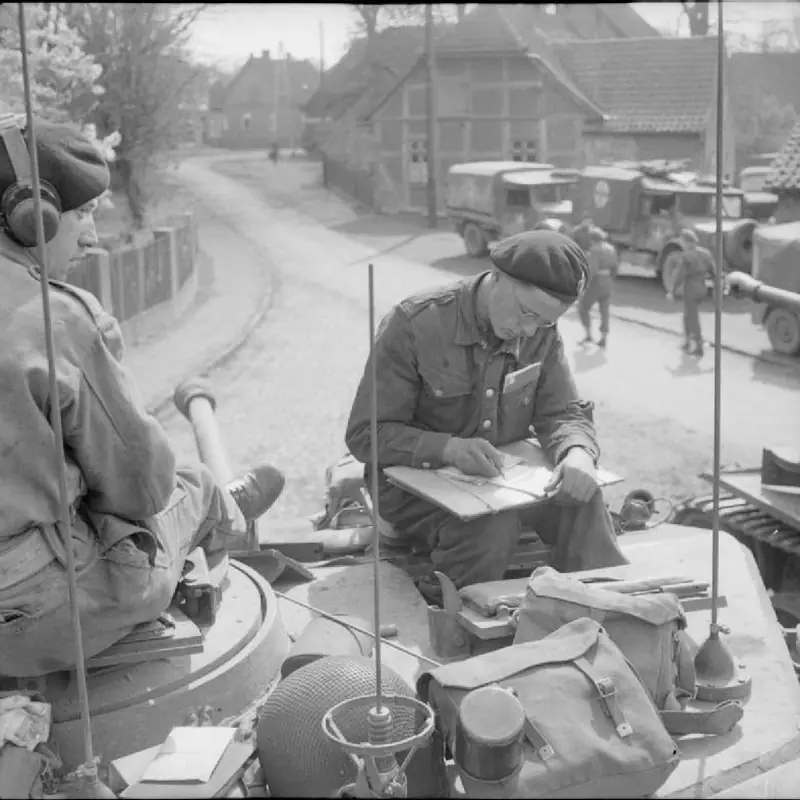

To read WW2 letters well, start with what isn’t there. Censorship meant men could not say where they were, what they were doing or which unit they were with. So read the date, the envelope and the small details, then match them to his unit’s war diary. That is how a vague letter becomes a place on a map.
Key facts
- Censorship
- Forces mail was read before it left
- Green envelope
- Army form for private and family letters; not read by the unit censor, but could be censored at the base
- Airgraph
- A letter photographed onto film, flown out, then printed; Forces rate 3d (1942)
- Air letter card
- 3d service from the Forces in the Middle East, introduced by 1941
- Best decoder
- His unit's war diary, matched to the letter's date
From Hansard (1941–1943) and The Postal Museum, checked 31 October 2026.
Here is the method, step by step.
Step 1: Sort before you read
Lay everything out. Keep each letter with its envelope. Don’t flatten, tape or unfold anything that resists. Our guide to preserving WW2 letters and documents explains safe handling.
Then put them in date order. Many letters are dated only “Tuesday” or “Sunday night”. Use:
- the postmark on the envelope
- replies he mentions (“thanks for yours of the 4th”)
- events: birthdays, Christmas, a new baby, a brother’s call-up
- the type of paper or form
Number each one in pencil on a separate slip, not on the letter.
Why WW2 letters say so little
Censorship. Military mail was read before it left, and anything that might help the enemy could be cut or the letter stopped. In April 1941 the Secretary of State for War told the Commons of a soldier confined to barracks for ten days for a breach of the censorship regulations.
Men knew the rules. So they wrote about the weather, food, mail and home. That is not dull. It is code for “I’m alive, and I’m thinking of you.”
How to read WW2 letters for hidden clues
Read each letter twice. First for the story. Then for evidence.
Weather and landscape. Heat, sand, rain, snow, mountains, jungle. Not proof, but a pointer.
Food and money. Local fruit, wine or currency can hint at the country.
Names. Mates, officers, the “sergeant-major”. Search for them in the war diary or the CWGC records.
Gaps. A sudden silence of weeks often lines up with a move or an operation.
Health. “I’ve been in hospital” may match a casualty entry on his service record.
Hints to home. Some men tried to slip clues past the censor. Treat these as guesses unless records confirm them.
What is a green envelope?
The War Office explained it to the Commons in April 1941. The “green envelope” was an Army form issued to troops for letters relating to private and family matters only. Its contents were censored at the base, but not examined by the unit censor, so a man didn’t have his officers reading his love letters.
Misuse was a breach of the censorship regulations. If your family has letters in a green envelope, they were meant to be personal.
Airgraphs and air letter cards
Not every “letter” is a letter. Look at the form.
What is an airgraph?
An airgraph is a photograph of a letter. The Postal Museum says the service was developed by the General Post Office, Kodak and the British Overseas Airways Corporation. Letters written on special forms were photographed onto microfilm and flown out. At the far end they were printed onto smaller sheets and posted on in envelopes.
Hansard records:
- in May 1942, airgraphs to the Forces cost 3d, and to civilian addresses 8d
- in January 1943, average transmission to the Middle East base took eight days, and to India and South Africa 15 days, not counting processing and delivery
The Postal Museum says the service ended on 31 July 1945.
An airgraph is small, glossy and photographic. The writing may be faint. Don’t try to clean it.
Air letter cards
In April 1941 the Postmaster-General told the Commons that the Army Postal Service had recently introduced an air letter card service at 3d for the Forces in the Middle East, homeward to Britain, except from Egypt. A matching 3d air mail postcard service went the other way, to the Forces in the Middle East.
A letter card is one sheet that folds to form its own envelope. If you have one, the outside is part of the letter. Keep it whole.
Step 2: Find the unit
Everything hangs on his unit. Look for:
- the return address on envelopes
- unit names in letters he received
- his pay book or service record
- photos showing a cap badge (see our cap badge guide)
Still stuck? Our guide on how to find which battalion grandad served in covers ten more routes.
Step 3: Match letters to the war diary
War diaries record where a unit was and what it did, often day by day. TNA holds them for the British Army. See our guide to WW2 war diaries.
Take a letter dated 14 June 1944. Open the diary for that week. If the unit moved, or fought, you may now know what he couldn’t write. (This date is an example only.)
| In the letter | Check in |
|---|---|
| Date or postmark | Unit war diary for that week |
| “I’ve been in hospital” | Service record casualty entries |
| A friend “didn’t make it” | CWGC records |
| A long silence | War diary for moves and operations |
| Mail from a camp | Prisoner of war records |
Letters from a prisoner of war
Letters from captivity have their own forms, stamps and rules. They may name the camp. See how to trace a WW2 prisoner of war.
Letters to him
Families often kept only one side. If his letters survive but not hers, read his replies for what she wrote. “Glad the roof is mended” tells you something happened at home.
Transcribe as you go
Type each letter up, word for word. Keep his spelling. Mark unclear words [like this?]. Note the date, the form (letter, airgraph, card), the envelope and any stamps.
A transcript means you handle the original less. It also makes the letters searchable, so you can spot the same name across years.
Then share it. Cousins may hold the other half of the correspondence.
FAQ: reading WW2 letters
Why don't WW2 letters say where he was?
Because of censorship. Forces mail was read, and anything that might help the enemy could be cut or the letter stopped. Most men learned to leave places out.
What is a green envelope in WW2?
An Army form for letters about private and family matters only. The War Office told the Commons in 1941 that their contents were censored at the base but not examined by the unit censor. Misusing one was a breach of censorship regulations.
What is an airgraph?
A wartime letter written on a special form, photographed onto film, flown out and printed as a small photograph near the addressee. Hansard records a 3d rate for airgraphs to the Forces in 1942.
How can I find out where a WW2 letter was written?
Note the date, his unit and any address, then read his unit's war diary for that week. The diary records where the unit was and what it was doing.
Should I remove letters from their envelopes?
Keep each letter with its own envelope. The envelope can carry the date, postmark and censor marks the letter lacks. See our preservation guide for safe storage.
Sources
Checked 31 October 2026.
- Hansard: Letters to Members (green envelope), 22 April 1941
- Hansard: Post Office, Mail Service (Middle East), 2 April 1941
- Hansard: Airgraph Service, 21 May 1942
- Hansard: Airgraph Mails, 20 January 1943
- The Postal Museum: Women in the Airgraph Service
- The National Archives: British Army operations in the Second World War