
- Home
- Preserving Heirlooms
- How to preserve WW2 letters and documents
How to preserve WW2 letters and documents
Cool, dry, dark and stable. Archivists' advice for keeping wartime papers safe for another eighty years.
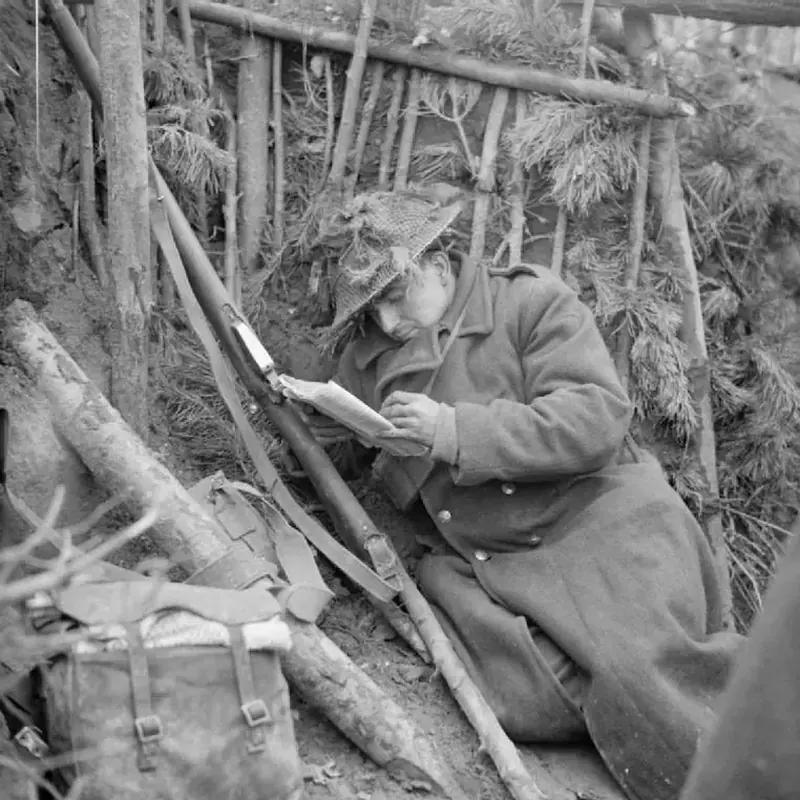

To preserve WW2 letters and documents, keep them flat in acid-free folders and boxes, in a cool, dry room with a steady temperature. Take out pins, clips and rubber bands. Never tape, glue or laminate them. Handle them as little as possible, and work from copies.
Key facts
- Where
- A cool, dry, stable room. Not the attic, loft, cellar, garage or shed
- Target conditions
- 13–20°C and 35–60% relative humidity, as stable as possible
- Remove
- Pins, staples, paperclips, rubber bands and self-adhesive tape
- Store in
- Acid-free folders and boxes; archival polyester or polypropylene sleeves
- Never
- Laminate, tape or glue originals
From The National Archives, the Record Office for Leicestershire, Leicester and Rutland, and the University of Nottingham Manuscripts and Special Collections, checked 31 October 2026.
That’s the whole method. Here is the detail, from the archivists who do it every day.
Where should I store WW2 letters?
Not in the attic. Archivists are united on this. The Record Office for Leicestershire, Leicester and Rutland advises against attics, lofts, cellars and garages, because temperature and humidity vary greatly from day to day and through the year. The University of Nottingham adds sheds, and warns of damp, dust and flooding.
Choose instead:
- a cool, dry, well-ventilated room
- an inside wall, not an outside one
- away from radiators, fires and sunlight
- away from pipes, tanks, sinks and leaky roofs
The Leicestershire guidance explains the outside-wall rule. Items stored against an outside wall become part of the building’s insulation, with high humidity behind them.
What temperature and humidity?
TNA’s guide to environmental management, citing PD 5454:2012, gives a range of 13–20°C and 35–60% relative humidity for paper-based archives. Aim low on temperature where you can.
Stability matters as much as the numbers. TNA explains that sudden swings in humidity cause microscopic structural damage. Too damp encourages mould and insects. Too dry makes paper brittle. Heat speeds up chemical decay.
You don’t need archive-grade control at home. A cheap thermometer and hygrometer will tell you which room is steadiest.
What about light?
Keep it dark. TNA says sunlight is particularly damaging, and recommends as little constant light as possible. Light fades ink and pictures and adds heat. Display copies, not originals.
Step 1: Remove what will damage them
Before you file anything, take out:
- pins, staples and paperclips, which rust and stain
- rubber bands, which perish
- self-adhesive tape, if it lifts away easily; if not, leave it for a conservator
- string and red tape ties
The Leicestershire guidance notes that rust stains are impossible to remove. Work slowly. If something fights back, stop.
Step 2: Flatten and sort
Unfold letters and keep them flat where you safely can, to prevent wear along the folds. Don’t force a brittle fold open.
Keep each letter with its own envelope. The envelope may carry the date, postmark or censor mark. Our guide to reading WW2 letters shows why those details matter.
Sort into date order. Number each item on a separate slip, in pencil. The University of Nottingham says to use pencil, not pen, when making notes near historic items, and never to write on documents or the backs of photos in biro or felt tip.
Step 3: Choose the right storage
Folders and boxes
Store documents flat in acid-free folders and boxes, says the University of Nottingham. The Leicestershire guidance adds: use plain, neutral packaging, not coloured. If water gets in, colour can bleed onto your papers.
Avoid direct contact with wood, plastic, metal, rubber and glass, unless the plastic is archival.
Sleeves
For fragile or torn items, an inert polyester sleeve protects them. The Leicestershire guidance recommends archival polyester, or polyester or polypropylene pockets. Throw out PVC pockets and anything stained or damp.
The University of Nottingham warns against ordinary commercial products that contain damaging chemicals. Buy from a conservation supplier.
Photographs
Use albums with inert polyester or polypropylene sleeves. Avoid “sticky” or self-seal albums. Their adhesives speed up fading, especially in colour prints. Never glue photographs down.
How to handle WW2 documents
Handling is one of the biggest causes of damage, the University of Nottingham says. So:
- wash and dry your hands first
- no food, drink or smoking nearby
- hold documents flat, in both hands
- turn pages slowly, especially in bundles that are sewn or tied
For photographs, the Leicestershire guidance recommends nitrile or vinyl gloves, not latex or cotton. Fingerprints can damage the image layer.
What not to do
| Don’t | Why |
|---|---|
| Laminate | Irreversible; heat and chemicals damage originals |
| Tape tears | Adhesives stain and are hard or impossible to remove |
| Glue into a scrapbook | Glue damages paper |
| Store in a loft or cellar | Wide swings in heat and damp |
| Use PVC pockets | Not archival; replace with polyester |
| Repair valuable items yourself | Find a professional conservator |
To find a conservator, both record office guides point to the Conservation Register.
What if WW2 papers get wet?
Act fast, but gently. The University of Nottingham advises:
- separate a small number of damp documents carefully into single sheets
- lay them on blotting paper to air-dry
- keep them away from radiators and direct heat
- fan out wet books in a current of cold air, interleaved with plain white paper
- don’t try to separate photographs stuck together; seek professional advice
Found insects or mites? Isolate the item in a sealed polythene bag and get advice. That’s emergency treatment only. Papers shouldn’t live in polythene.
Make copies, and work from them
Scan or photograph everything. The Leicestershire guidance says working from copies prolongs the life of originals. Keep the originals boxed and use the copies for research and sharing.
Watch the copies, too. The University of Nottingham notes we don’t know how long digital files last. Back them up, check them, and print the most important on good photo paper.
Transcribe as you go. A typed transcript can be searched and shared, and spares the original. See our letters guide for a simple method.
Medals, badges and other objects
Keep objects out of the paper box. Metal can mark and stain paper. Store medals and badges separately, labelled with where they were found. See our guides to identifying WW2 medals and WW2 cap badge identification.
Should I give them to an archive?
You may. Local record offices take private family papers. Dr John Alban of the Norfolk Record Office, in a talk published by TNA, explains that records can go to a record office either on deposit, where you keep ownership, or as a gift, where ownership passes to the record office.
Ask your local record office first. Each has its own collecting policy. Keep copies for the family either way.
FAQ: preserving WW2 letters and documents
How do I preserve old WW2 letters?
Store them flat in acid-free folders and boxes, in a cool, dry, stable room away from sunlight. Remove paperclips and staples, never use tape or glue, and handle them with clean, dry hands.
Should I laminate WW2 documents?
No. The University of Nottingham's guidance says lamination is irreversible and the heat and chemicals will damage fragile originals. Use an inert polyester sleeve instead.
Is the attic a good place to store old letters?
No. Archivists advise against attics, lofts, cellars and garages, because temperature and humidity swing widely there. That encourages mould and insects.
Should I wear gloves to handle old letters?
Clean, dry hands are the basic rule for paper. For photographs, the Leicestershire Record Office advises nitrile or vinyl gloves, not latex or cotton.
What do I do if WW2 papers get wet?
Separate the sheets carefully and lay them on blotting paper to air-dry, away from radiators and direct heat. Don't try to separate photographs that are stuck together; get professional advice.
Sources
Checked 31 October 2026.
- The National Archives: A guide to environmental management of archival material
- Record Office for Leicestershire, Leicester and Rutland: Looking after your family history memorabilia (2018)
- University of Nottingham Manuscripts and Special Collections: Looking after important papers at home
- Dr John Alban, Norfolk Record Office: Keeping and using private archives (hosted by The National Archives)