
- Home
- Service Records
- How to trace a WW2 prisoner of war
How to trace a WW2 prisoner of war
There is no single POW file. There are a dozen places his name might be. Here is the order to search them.
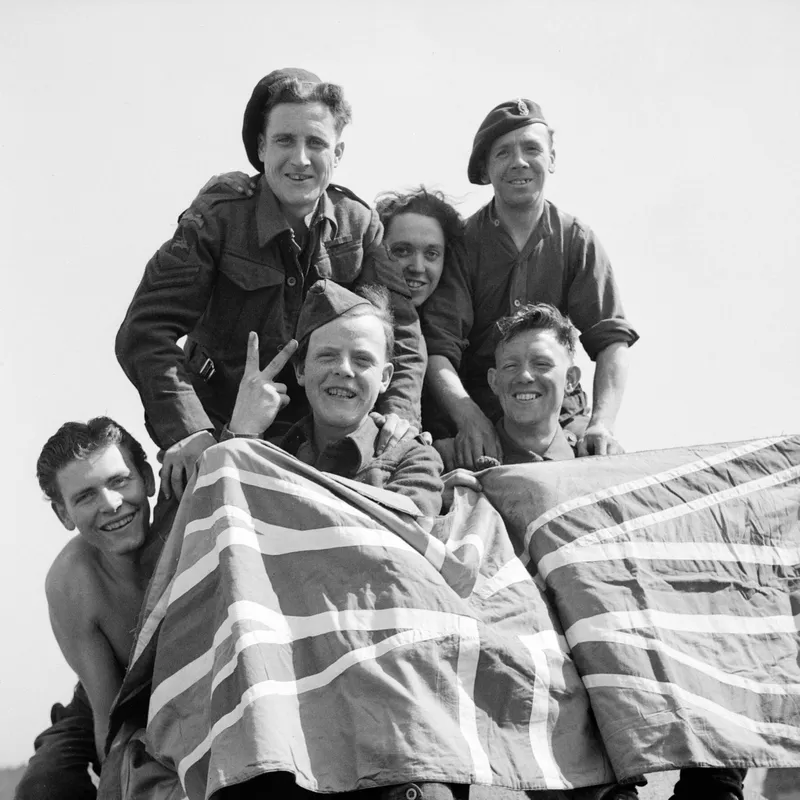

To trace a WW2 prisoner of war, start with the liberation questionnaires (WO 344) on Ancestry and the POW lists (WO 392) on Findmypast. Both charge. Then search The National Archives’ free POW name search, which covers escape reports, German record cards and more. His service record should confirm capture and release dates.
Key facts
- Single file?
- No. The National Archives says there is no definitive POW record for anyone
- Best first search
- Liberation questionnaires (WO 344) on Ancestry, charges apply
- POW lists
- WO 392 lists on Findmypast, charges apply
- Far East
- Japanese index cards (WO 345) and Singapore camp records (WO 367)
- Free name search
- The National Archives' POW search tool across several series
Based on The National Archives' guide to British prisoners of the Second World War, checked 31 October 2026.
Be ready for a hunt. The National Archives is clear: there is no definitive POW record for any individual and no single case file. You search several series, one after another.
Which camp names will you see?
German camp names appear in British records. The National Archives gives these:
| Term | Meaning |
|---|---|
| Stalag (Stammlager) | In most cases, a camp for NCOs and enlisted men |
| Oflag (Offizierlager) | A camp for officers only |
| Stalag Luft | An air force camp administered by the Luftwaffe |
| Dulag (Durchgangslager) | A transit camp where captured aircrew were processed and interrogated |
| Milag and Malag | In most cases, camps for the Merchant Navy and Royal Navy |
A camp number, such as Stalag 11B, is the key to camp reports later.
Step 1: confirm he was captured
- His service record. It should show “missing”, “POW” and later repatriation. Order it via our WW2 Army service records guide, or the RAF or Royal Navy guides.
- Daily casualty lists (WO 417). On Findmypast. They record casualties of all types, prisoners included.
- Family papers. Cards and letters he sent from captivity may name the camp.
Step 2: the online name searches
Liberation questionnaires (WO 344)
The most personal source. Freed prisoners filled them in. They cover both Germany and Japan.
They give name, rank, number, unit and home address. They can also list:
- main camps, hospitals and work camps
- serious illnesses and treatment
- suspected collaboration by other prisoners
- bad treatment by the enemy
- brave acts by fellow prisoners, and civilians who helped escapers
On Ancestry (charges apply). The online version excludes people born less than 100 years ago. For them, browse WO 344 by surname range in Discovery and see the original at Kew.
POW lists and other Findmypast records
The National Archives lists these on Findmypast (charges apply):
- WO 392: lists of POWs from the War Office’s Directorate of Prisoners of War. One list, WO 392/21 (Allied forces held by Italy), is only available as an original.
- WO 345: Japanese index cards of Allied POWs and internees, partly in Japanese. The Dutch National Archives has a translation guide.
- WO 367: about 13,500 Allied POWs and civilian internees held in Singapore camps.
- WO 361: registers and records of POW deaths in Europe and the Far East.
- AIR 40: POW lists from Air Ministry intelligence papers.
- BT 373: Merchant Navy POWs.
The British Army POW database
Ancestry’s “British Army Prisoners of War, 1939-1945” lists Army, Navy and Air Force POWs. The National Archives notes these are not its records. Useful, but check against originals.
Step 3: The National Archives’ free POW search
The National Archives has a bespoke name search covering several series. Try surname only, surname and initials, then surname and forenames. Different combinations return different results.
It covers, among others:
- ADM 358: missing naval personnel.
- AIR 40: RAF escapees.
- AIR 81: RAF missing personnel files.
- BT 373: Merchant Navy POWs.
- CO 1070: Colonial Office index of internees and some POWs in Hong Kong and Malaya. Cards for names A to D are missing.
- WO 416: German record cards of British and Commonwealth POWs. Some stay closed for people born less than 100 years ago.
Step 4: escape, evasion and interrogation reports
Did he escape, or try to? Search WO 208 by name. Escape and evasion reports cover prisoners held in Europe and North Africa.
- Not all WO 208 files are digitised, and some are not findable by name. A name search may instead turn up an index card that gives the report’s reference.
- Findmypast also indexes WO 208 reports and cards (charges apply).
- RAF escapers and evaders: AIR 40/1545 to 1552.
- MI9 escape maps, 1940 to 1945: WO 418.
Liberation and interrogation reports in WO 208 can hold more than the questionnaires. If a name search fails, a card index in the reading rooms at Kew can help.
Far East prisoners
Many sources above cover Japanese captivity too, including WO 344, WO 345 and WO 367. Also:
- WO 392/24: British POWs held in Japan or Japanese-occupied territory.
- WO 347: hospital registers kept by prisoners in Far East camps, 1942 to 1947. They can give the ailment, unit, age and religion. Start with the indexes in WO 347/60 to 200.
- CO 980 and HO 215: conditions in Far East camps.
Life in the camp
You will rarely find him by name here, but you will find his camp.
- Red Cross camp reports: The National Archives says these give details of conditions. Search WO 224 by camp name.
- FO 916: reports on internment camps.
- Printed lists at Kew: published lists cover about 169,000 British and Commonwealth POWs held by Germany.
Outside The National Archives
- CWGC records POWs who died in captivity. See how to find a WW2 grave.
- The International Committee of the Red Cross holds lists of POWs of all nationalities, but takes only enquiries that meet its criteria.
- The Imperial War Museum holds personal letters, diaries and interviews.
- The Wiener Holocaust Library holds material on POW experiences.
A note on medals
Check what he was entitled to for his service before capture. See how to identify WW2 medals and how to claim unissued medals.
Next steps
Search WO 344 and WO 392 first, then the free name search. Write down every camp number you find. Each one opens another door.
FAQ: Tracing a WW2 prisoner of war
How do I find out if my grandfather was a prisoner of war?
Search the POW lists (WO 392) on Findmypast and the liberation questionnaires (WO 344) on Ancestry. His service record and the daily casualty lists (WO 417) may also record his capture.
What is a liberation questionnaire?
A form filled in by freed prisoners. It gives name, rank, number, unit and home address, and can list camps, hospitals, illnesses, ill treatment and help from civilians.
What does Stalag mean?
Stalag (Stammlager) was, in most cases, a German camp for NCOs and enlisted men. Oflag was for officers, Stalag Luft for air force prisoners, and Dulag a transit and interrogation camp.
Why can't I find him on Ancestry's liberation questionnaires?
The online images and indexes exclude people born less than 100 years ago. The originals are at Kew, arranged by surname range in WO 344.
What if he died as a prisoner of war?
Search the CWGC, which records those who died in captivity. War Office registers of POW deaths (WO 361) are on Findmypast.
Is The National Archives' POW name search free?
Yes. It covers several series, including escape reports and German record cards. Try surname only, then surname and initials, then full names.
Sources
Checked 31 October 2026.
- The National Archives: British prisoners of the Second World War and the Korean War
- The National Archives: British Army soldiers in service after 1918
- The National Archives: Royal Air Force personnel
- The National Archives: Deaths in the First and Second World Wars
- CWGC: Find war dead
- International Committee of the Red Cross: Archives