
- Home
- Service Records
- Home Guard records
Home Guard records: how to find a WW2 Home Guard member
Mostly still offline. Here is what exists, when it goes online, and how to get one now.
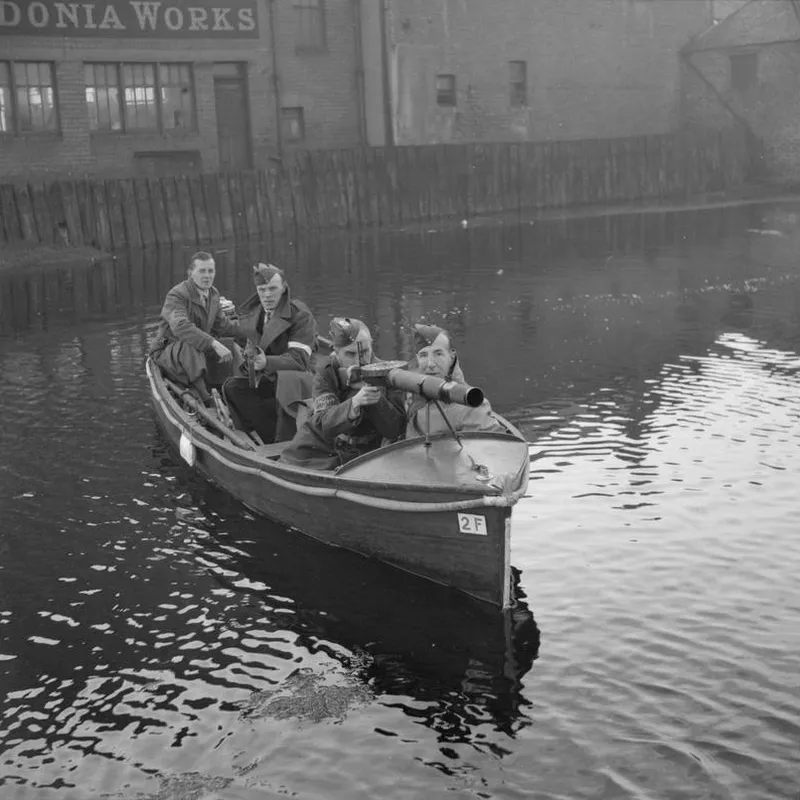

Home Guard records are the enrolment forms filled in when each volunteer joined, from 1940 to 1945. For County Durham they are online now: search by name and download them from The National Archives’ Discovery catalogue. For the rest of England and Wales, the forms have moved to Kew and are due online through Ancestry by March 2028. Until then, request a search from The National Archives. Charges apply.
Key facts
- Durham
- Enrolment forms searchable and downloadable now on Discovery
- Rest of England and Wales
- Transferred to Kew; expected online via Ancestry by March 2028
- Get one now
- Request a search from The National Archives (charges apply)
- What's on the form
- Name, date and place of birth, address, earlier military service
- Medal
- Home Guard service from 14 May 1940 to 31 December 1944 counts toward the Defence Medal
Based on The National Archives' Home Guard personnel guide and GOV.UK medal guidance, checked 31 October 2026.
That covers most people. The detail follows.
Where are Home Guard records kept?
At The National Archives. It says the Home Guard was organised by region, and:
- Durham enrolment forms were transferred first, as a pilot. They are in Discovery now.
- The remainder of England and Wales were transferred as part of the MOD service records project. They will be released through a licensed partnership with Ancestry, expected online by March 2028.
Scotland and Northern Ireland are not mentioned in that guide. If your man served there, check with The National Archives before you pay.
What does a Home Guard enrolment form show?
Each volunteer answered a set of questions. The answers went on the form. The National Archives lists:
- first and last name
- date and place of birth
- address
- brief details of former military service, on the reverse
That last line matters. If he served in the First World War, it points you to a whole new set of records.
Some files hold more: applications for medals, medical forms and correspondence. The medical forms are closed until 2045 for data protection.
How to get a Home Guard record now
If he served in County Durham
- Search Discovery by name. The records cover County Durham only.
- Download the form. Open records can be downloaded.
- Closed record? Discovery shows a form to request a review. You pay a search fee and give evidence that he is no longer living.
If he served anywhere else in England and Wales
Request a search from The National Archives. It offers two forms:
- Form 1: for a deceased person born before 1940.
- Form 2: for a living person, or your own record, born before 1940.
Charges apply. Have his full name, date of birth and home address in 1940 ready. The address helps, because the Home Guard was organised by region.
Or wait
If cost matters more than time, wait for the Ancestry release, expected by March 2028. Ancestry charges a subscription, but The National Archives makes its online records free to view at Kew.
Other Home Guard sources
The enrolment form is short. These fill the gaps.
- Home Guard Lists. Published lists, arranged by area with name indexes, trace officers. At The National Archives library and specialist libraries.
- Home Forces papers (WO 199). Regimental histories, nominal rolls of Home Guard auxiliary units and other papers. The war diary of the Durham 2nd Battalion is WO 199/3324.
- Local archives. County record offices may hold Home Guard papers. Search The National Archives’ catalogue and filter to “Other archives”. Durham County Record Office holds regulations and orders for the Durham Home Guard among its Durham Light Infantry records.
- Family papers. Look for certificates, armbands, badges, letters and photographs.
Gallantry awards to the Home Guard
A few Home Guards won gallantry awards. The National Archives points to:
- WO 373: recommendations for military honours, 1935 to 1990, which include some Home Guard awards.
- Home Office civil defence gallantry papers (HO 250): recommendations for the George Cross, George Medal or Empire Gallantry Award. Searchable on Ancestry (charges apply).
- T 336: Treasury civil defence awards files, searchable by name. Most of the information was published in the London Gazette.
- AIR 2/9040: recommendations for the British Empire Medal to some Home Guards on stand-down, 1944.
Our gallantry awards guide explains how to search the Gazette.
Did the Home Guard get a medal?
Yes, potentially: the Defence Medal. GOV.UK says it was awarded for non-operational service, including members of the Home Guard. Home Guard service counts between 14 May 1940 and 31 December 1944.
In the UK the qualifying time was 1,080 days. The ribbon is flame-coloured in the centre, flanked by green stripes, with narrow black stripes. GOV.UK explains the symbolism: enemy attacks on Britain’s green land, and the black-out.
Some Home Guards never received theirs. Next of kin can still apply. See how to claim WW2 medals, and how to identify WW2 medals if you have a medal and are unsure what it is.
Served in the Army too?
Some Home Guards also served in the regular forces. For the Army record, see our WW2 Army service records guide.
Reading his form: three checks
Once you have it, check three things.
- Date and place of birth. Compare them with his birth certificate or family records. A mismatch may mean you have the wrong man.
- Address. The Home Guard was organised by region. His address tells you which area, and so which county record office to search for his battalion’s papers.
- The reverse. Former military service is noted there. First World War service opens a separate set of records. Note the regiment and any number given.
Then file a copy with his other papers. Our guide to preserving WW2 letters and documents explains how to store originals.
Next steps
In Durham? Search Discovery now. Anywhere else in England and Wales? Decide: request a search today, or wait for 2028. Either way, search your county record office’s catalogue for his battalion.
FAQ: Home Guard records
Are Home Guard records online?
Only for County Durham so far. Durham enrolment forms can be searched by name and downloaded from Discovery. The National Archives expects the rest of England and Wales to be online through Ancestry by March 2028.
How do I get a Home Guard record before 2028?
Request a search from The National Archives. Use Form 1 for a deceased person born before 1940, or Form 2 for a living person or your own record. Charges apply.
What does a Home Guard enrolment form show?
First and last name, date and place of birth, address, and brief details of earlier military service on the back. Some files include medal applications, medical forms and correspondence.
Can I see his Home Guard medical form?
Not yet. The National Archives says the medical forms are closed until 2045 for data protection reasons.
Did the Home Guard get a medal?
Home Guard service could count toward the Defence Medal. GOV.UK says Home Guard service counts between 14 May 1940 and 31 December 1944, and UK service needed 1,080 days.
Are Home Guard records free?
Searching Discovery costs nothing, and Durham forms are downloaded from it. For the rest of England and Wales, a search by The National Archives carries a charge, and the Ancestry release will be on a subscription site.
Sources
Checked 31 October 2026.